Memory, dreams, and the lost homeland
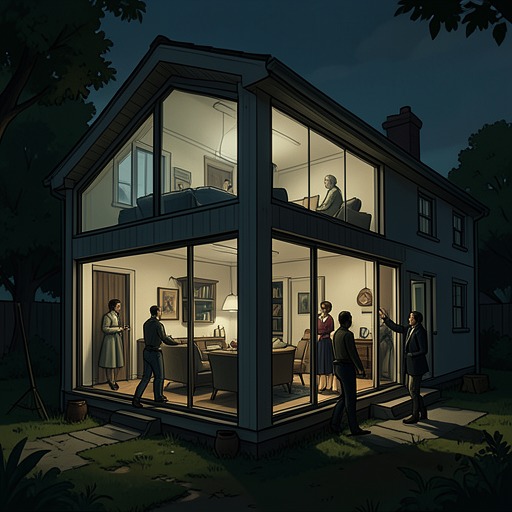
The Glass RoomMemory, dreams, and the lost homeland are bound together through the Landauer House: a place Liesel can reconstruct in her mind, but cannot simply recover by remembering. Across exile and a later return, the Glass Room shifts between a precise remembered interior, an elusive dreamscape, and a publicly contested architectural landmark. The house holds both intimate family life and histories of confiscation and political change, so that seeing or preserving it never wholly restores what was lost.
The house as remembered home
Liesel describes leaving the house as a loss that feels like the amputation of a limb. She remembers it as a shared home, belonging not only to herself and Viktor but also to Rainer. In her mental reconstruction she walks along the terrace, picks up the children’s toys, and revisits the rooms used by Ottilie and Martin. Even the bathroom’s row of rubber-duck silhouettes returns as a particular detail of family life. The recollection is at once domestic and architectural: remembered objects lead her through the house toward the Glass Room.
Her imagined route through that room is exact. She descends twelve steps to the curve, then nine more, until the space opens around her as it once did. This measured interior gives memory a structure, but not the force of actual possession. Liesel can place herself there in imagination, yet tells Rainer that she does not feel she belongs in her present surroundings. Viktor’s confidence that he belongs anywhere, and his talk of moving to the United States, contrast with her longing for home and friends. For people without work or relatives there, she recognizes, emigration is constrained by quotas and uncertain routes; Cuba is raised as one possibility, but not one she wants.
Exile and the changing edges of memory
A letter from Hana makes the distance between past and present palpable. It is already more than a month old when it arrives, and its account of the present may describe a relationship that has since changed—or gone nowhere. Liesel cannot know. In exile, events that are happening now still lie in the future for the recipient; delay unsettles the ordinary order of time. The letter’s late arrival makes uncertainty not an abstract condition but part of communication itself.
Liesel connects this uncertainty to the soft-focus trick Viktor once showed her: a faint smear of Vaseline on a camera lens, used to soften photographs of film stars. In her reflection, memory works similarly. Recorded scenes blur at their edges and lose their context; what remains may become imagination. The comparison does not make the past unreal, but shows how distance alters its clarity. She can remember the house intensely while knowing that recollection is also a reconstruction.
In another letter, written while the family is abroad, Liesel describes exile as tedious and longs for Město, friends, and family. The children play cards and chess and learn English through a word game, Lexicon, as preparations for a possible new life in America. They swim, and Martin becomes a little sailor with Viktor. These activities could resemble a holiday, she observes, but do not make it one. The family’s daily routines acquire the weight of an uncertain future, while the place they have left remains the measure of what is missing.
The letter also turns memory toward Hana. A visit to the cinema, where Liesel recognizes Eva Kiesler under a changed name, recalls an earlier episode involving Hana and prompts Liesel to imagine that the past might be lived differently. She writes that, if they could have that time again, she would not have given Hana reason to go with anyone else; she ends by expressing the wish that Hana were there. After rereading the letter, however, she wonders whether to send it. Longing becomes both a confession on the page and a question of whether it can cross the distance between them.
Dreaming the Glass Room
During exile, dreams make the lost house return in forms that are difficult to hold. One sequence is described through flesh, hair, glass, chrome, buildings, and people, with its images vanishing on waking. The dreams do not provide a stable substitute for home; they make its forms recur while withholding them from ordinary possession. Liesel also writes to Hana about the heat where she is living, but the letters accumulate in a desk drawer because war has sealed Europe off from the outside world. The inability to send them gives private memory a material counterpart: words are composed, yet remain stranded.
A later dream turns from heat to cold. Liesel imagines the Glass Room washed in reflection, the view across rooftops and through trees, and snow beneath her boots. The place has no fixed form or substance; it exists in the shifting manner of a dream. Its images—space, glass walls, black and white, the gleam of chrome—reassemble the house as sensation and design rather than as a recoverable address.
The dream’s central transformation is linguistic as well as visual. Der Glasraum, the Glass Room, changes by one letter into der Glastraum, the Glass Dream. The small verbal shift makes the room and the dream seem to turn into one another: architecture becomes a vehicle for memory, while memory becomes a space that can be entered only in imagination. This is not a return to the actual house, but a recurring mental form in which its materials and proportions remain available even when its history and ownership do not.
Return, heritage, and unresolved loss
Years later, the house enters public debate as an architectural treasure still being used as a children’s gymnasium. A newspaper account identifies the Landauer House in the Blackfield district, overlooking Lužánky Park and the city centre, as the work of Rainer Abt and a masterpiece of functionalist architecture. Its description dwells on the living room’s scale—two hundred and thirty square metres for a family of four—and on its glass walls, chrome supports, and onyx partition. Yet the building has also been altered: a wartime bomb destroyed the original plate-glass windows, which were replaced by smaller panes, although the mechanism that once lowered two window frames into the basement still works. Architectural survival is therefore never simple recovery; the surviving structure bears changes made by the events that displaced its former occupants.
The question of what to do with the building returns when the city invites Liesel’s family to witness a handover. The invitation is presented as part of a new political opening, an effort to discuss past errors and restore normal relations with neighboring countries. Martin, however, sees accepting it as potentially recognizing the city’s legal ownership of the confiscated property. The visit consequently carries two meanings at once: a possible gesture toward renewed relations and a risk of treating the loss of the family home as settled.
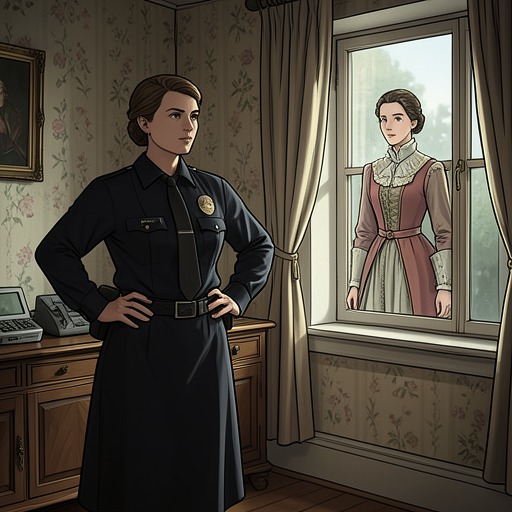
On returning to the Glass Room, Liesel is crowded by people and asks Hana to take her outside. The room she had once entered in memory as the site of happiness now feels oppressive when filled with visitors and official attention. The contrast makes the difference between remembered space and public heritage immediate: the same room can preserve the form of a lost home and serve as a stage for other people’s accounts of it.
The house is eventually described as a museum, but the narrative resists the idea that this label exhausts its meaning. Marie Delmas is told that the Landauer family left in 1938 and that the house belongs to the city. What she encounters instead is a space that remains vibrant with accumulated life, figured through the piano behind the onyx wall and the remembered sounds of children and adults. In its final image, the Glass Room is called a place of balance and reason, held in a frame that handles light and volume as tangible materials and seems to deny time. Yet the room’s apparent timelessness stands beside a history of exile, changed use, and contested ownership. Memory keeps that history present without making the lost homeland whole again.